
Gestalt Et Jive – Live In Rhein-Main
Gestalt et Jive was an innovative multinational avant-rock group founded in 1984 by Alfred Harth. The group thrived on a boundary-pushing agenda of “hot and danceable free improvisation” that fused complex rhythmic ideas, dense textures, and fragmented song structures performed by a cast of highly original musicians. The band’s lineup reflected its international spirit, with British keyboardist Steve Beresford, French bass master Ferdinand Richard, German drummer Uwe Schmitt, American drummer Anton Fier, and the enigmatic A23H (Alfred 23 Harth) coming together for the group’s early years (1984–1985).
The initial incarnation featured Steve Beresford, Ferdinand Richard, Uwe Schmitt, and A23H. Uwe Schmitt, noted for his sensitive, sophisticated drumming, eventually transitioned out of performance around 1985, shifting focus to a successful journalism career in Germany. To maintain the group’s creative momentum, A23H brought in Anton Fier and later Peter Hollinger, pushing the rhythm section into fresh territory. Steve Beresford, whose energetic style was key in the early phase, departed in 1986 to concentrate on solo projects.
The band’s nucleus for its later years (1986–1988) crystallized around Ferdinand Richard, Peter Hollinger, and A23H. Richard, celebrated for his work as the bass player and vocalist of French avant-rock legends Etron Fou Leloublan, brought a highly distinctive voice to Gestalt et Jive. His playing, whether on standard bass or six-string alto bass guitar, was marked by oblique figurations, odd-metered arpeggios, and a cool, cerebral timbre that complemented the band’s complex sound world. With Richard, Harth, and Hollinger, Gestalt et Jive embraced spontaneous improvisations, sudden instrumental shifts, and an ever-evolving palette of fragment-based pieces, reflecting both postmodern and internationalist ideals.
The last concert took place in October 1988 at the Festival International de Musique Actuelle de Victoriaville in Canada—a symbolic curtain call at one of the leading stages for experimental and avant-garde music.
Releases:
•Nouvelle Cuisine (1985)
•Gestalt et Jive (1986)
•Neowise (2020)
•Live in Rhein-Main -For Holli (2025)
•Short tracks on Sweet Paris (1990), Musique’s Action (1993 compilation), and Alterations (2016 compilation)
These records capture the band’s dynamic shifts, from intricate, brainy interplay to exhilarating improvisation, all underpinned by Richard’s iconoclastic bass lines and Harth’s conceptual energy.
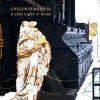
The new double album “Live in Rhein-Main” extends the documented journey of Gestalt et Jive, adding two essential live recordings to a body of work that already includes “Nouvelle Cuisine”, a double LP by Gestalt et Jive, and “Neowise”. Together, these releases trace the restless evolution of a group determined to stretch the boundaries of jazz and experimental music.
The first disc features the Wiesbaden concert of 1986, a set where daring interplay and spontaneous invention revealed the band’s creative intensity. The second disc captures their unforgettable appearance at the 13th Jazzfest Hofheim in 1987. On that night, Ferdinand’s delayed arrival from Avignon forced a reshuffle in the festival lineup, unexpectedly pushing Gestalt et Jive into the role of closing act. The result was a powerful, conclusive performance that left the audience exhilarated, sealing the evening with surprise, energy, and artistic closure.
“Live in Rhein-Main” is more than just another archival release. It reconnects the thread between the group’s formative studio works and their explosive stage presence, offering a vivid window into their mid-1980s aesthetic. At the same time, it stands as a tribute “For Holli”, the late drummer Peter Hollinger whose precision, drive, and free-spirited energy gave Gestalt et Jive its heartbeat.
These two concerts confirm not only the band’s flexibility and fearless improvisation, but also their lasting contribution to the cultural landscape of the Rhein-Main area and the European avant-garde scene.
Nearly four decades later, the fire remains unmistakably alive.
Longlist 1/2026 | Preis der deutschen Schallplattenkritik
Mit dem Koffer an die Grenzen
Rückblick auf die wilden 1980er Jahre mit einem Doppelalbum des Trios “Gestalt et Jive”
Es geht ziemlich wild los, keiner der drei Musiker will auf irgend etwas, egal was, warten, und so steigert sich der Eindruck von ungezügelter, dabei kollektiv geteilter und von einem belastbaren gegenseitigen Einverständnis getragener Zügellosigkeit im weiteren Verlauf der Musik eher noch. Auch wenn es Einschnitte, Innehalten, Zuhören, vorübergehende Gelassenheiten und Zwischenbeifall gibt und natürlich immer wieder Neuanfänge und konsensuelle Brüche und Abbrüche.
Kann sein, dass der freie Jazz nie so frei war wie in den 1980er Jahren. Und bei Gestalt et Jive geht es nicht nur stilistisch und formal frei und freigeistig zu, sondern immer auch kollektiv.
Was das heißt? Es heißt: Freiheit, Gleichheit, Brüderlichkeit (Schwestern waren damals im Jazz noch vergleichsweise rar) beim Spielen, dabei freier Wettbewerb ohne Übelnehmerei.
Gestalt et Jive, das war vor vier Jahrzehnten in der Rhein-Main-Region eine Aufreger-Band mit einem enorm innova-tiven und ungeglätteten Potenzial. Die Besetzungen wechselten gelegentlich hier und da, zum Beispiel spielte erst eine Zeit lang Uwe Schmitt Schlagzeug (der seinerzeit gelegentlich auch für die Frankfurter Rundschau schrieb und später unter anderem Ostasien-Korrespondent der “Frankfurter Allgemeinen Zeitung” wurde), dann Peter Hollinger, Alfred Harth an den Holzblasinstrumenten war immer dabei, genau wie Ferdinand Richard am Bass.
Kochtöpfe, Spielzeug
Im vorliegenden Fall aber geht es vor allem um Peter Hollinger. Vielen galt er in den 1980er Jahren als einer der kreativsten Schlagzeuger der Szene. Seine “Koffersuite”, die er seit Mitte der 1980er Jahre entwickelte, war eine singuläre Solo-Unter-Es geht ziemlich wild los, keiner der drei Musiker will auf irgend etwas, egal was, warten, und so steigert sich der Eindruck von ungezügelter, dabei kollektiv geteilter und von einem belastbaren gegenseitigen Einverständnis getragener Zügellosigkeit im weiteren Verlauf der Musik eher noch. Auch wenn es Einschnitte, Innehalten, Zuhören, vorübergehende Gelassenheiten und Zwischenbeifall gibt und natürlich immer wieder Neuanfänge und konsensuelle Brüche und Abbrüche.
Kann sein, dass der freie Jazz nie so frei war wie in den 1980er Jahren. Und bei Gestalt et Jive geht es nicht nur stilistisch und formal frei und freigeistig zu, sondern immer auch kollektiv.
Was das heißt? Es heißt: Freiheit, Gleichheit, Brüderlichkeit (Schwestern waren damals im Jazz noch vergleichsweise rar) beim Spielen, dabei freier Wettbewerb ohne Übelnehmerei.
Gestalt et Jive, das war vor vier Jahrzehnten in der Rhein-Main-Region eine Aufreger-Band mit einem enorm innovanehmung, bei der er zunehmend Alltagsgegenstände wie Kochtöpfe, Schrottmaterialien, Autonummernschilder, und Spielzeug (nicht unbedingt nur aus Metall) als Schlagwerk-Instrumentarium nutzte.
Hollinger erkrankte, lebte die letzten 35 Jahre in Berlin und beging 2021 in seiner Wohnung Suizid, einen Tag vor einer befürchteten Zwangsräumung.
Er ist Widmungsträger dieser Doppel-CD, die zwei Konzerte des Trios mit ihm selbst am Schlagwerk, Alfred Harth an verschiedenen Holzblasinstrumenten und Ferdinand Richard am elektrischen Bass.
Das eine Konzert, gespielt im Oktober 1986 im Keller der Wiesbadener Musikervereinigung ARTist, besteht aus einer Sequenz von heftig bewegten und erregten kollektiven Aktionen, bei der lineare Rhythmik (zugunsten eines intensiv erregten Pulses) ebenso vermieden wird wie instrumentaler Wohlklang.
Gleichwohl ist die Musik frei von Vermeidungs-Anstrengungen. Ein starker Impuls herrscht in ihr, nicht nachzulassen, immer wieder Grenzen zu suchen und Lücken zu finden oder herzustellen. Der idiomatische Einzugsbereich ist breit angelegt, es herrscht der rüde Geist des Punk, nichts wird hier verschmäht außer der Idee, einmal zur Ruhe kommen zu können. In der Textur gibt es allergrößte Transparenz, auch in hochverdichtetem Getümmel, und die Klangeigenschaften der Aufnahme sind historisch korrekt und dem kleinen Gewölbe des ARTist-Kellers angemessen.
Die zweite CD dokumentiert ein Konzert des Trios ein gutes halbes Jahr später auf dem 13. Jazzfestival in Hofheim am Taunus. Es zeigt die Band in einer anderen Verfassung – nicht ruhiger, aber weniger auseinanderdriftend und mit klareren Spielstrukturen.
Das fünfte Stück der Setlist bei diesem Konzert trägt den bemerkenswerten Titel “In Pursuit of Limping Rhythms – For Paul Feyerabend“. Es hält einerseits, was der Titel verspricht, andererseits enthält der Name Paul Feyerabend den Verweis auf einen erkenntnistheoretischen Grundsatz, der in Feyerabends seinerzeit intensiv diskutiertem Werk “Wider den Methodenzwang” formuliert war und der als – zuweilen auf die allzu leichte Schulter genommener – Grundsatz einer anarchistischen Erkenntnistheorie gelesen wurde: “Anything Goes“.
Das war zugleich der musik-philosophische Grundsatz des Trios Gestalt et Jive.
Hans-Jürgen Linke (Frankfurter Rundschau) 23/01/2026
Mit “Live in Rhein-Main” (DNN 042 C, 2xCD) macht das wunderbare Label in Mailand zwei weitere Konzertmitschnitte von Gestalt Et Jive erstmals zugänglich. Als eines der – zusammen mit Cassiber, Duck and Cover, Vladimir Estragon – Projekte, in denen Alfred Harth mit Gleichgesinnten an Kollisionen und Fusionen von Jazz, NY Downtown, Postpunk und Rock in Opposition züngelte. Von 1984 bis ’85 – eingefangen auf “Nouvelle Cuisine” (1985) – mit, neben Ferdinand Richard (Etron Fou Leloublan) an Bassgitarre, noch Steve Beresford (Alterations, Frank Chickens) an Keys und Anton Fier (Pere Ubu, The Golden Palominos) – der 2022 den Freitod wählte – oder Uwe Schmidt (Sogenanntes Linksradikales Blasorchester, The Punkjazz Group) an Drums. Danach von ’85 bis ’88 als Trio mit Peter Hollinger (1954-2021), dem Drummer von Uludag – festgehalten auf “Gestalt Et Jive” (1986). Nun wird das vertieft mit ihrem Spiel am 12.10.1986 im ARTist, Wiesbaden und am 21.03.1987 beim Hofheimer Jazzfest. Mit Richard als struppigem Drahtharfer, Hollinger als energischem Groover oder lakonischem Poltergeist, und A23H einerseits an Alto-, Tenor- & Sopranosaxophon, Harmonika, Whistles, Lockpfeifen und Vocals, andererseits mit auch noch Bassklarinette & Maultrommel. Und der ganzen Sophistication von ‘Beltane‘ (dem irischen Sommeranfang’), ‘Historiopoetik‘, ‘Archipelagisches Denken‘ (das kreolisierende Weltdenken nach Edouard Glissant, in elegischer Hymnik), ‘Laissez-vous Sortir!‘ als holprigem Drehwurm, dem ‘Joïk Instrumental‘ als plinkplonkigem D’n’B, ‘Mudang‘ (koreanische Schamaninnen in Trance). Bei ‘Komischer Dreh, Inferenz‘ singt Harth punkig: Viele Menschen meinen, dass Du nicht das Recht hast zu existieren. ‘Emisch‘ bringt Kulturanalyse mit den Augen eines Insiders. ‘WaschSalon Dilemma‘ spielt, ostinat geschleudert, an auf Harths Frankfurter Avantgardegalerie von 1984 bis 1991, ‘Famadihana‘ in besinnlichem Andenken an Holli und an Fier an auf das Leichenwendfest in Madagaskar, ‘Imbolc‘ auf das irische Frühjahrs-Licht-Fest. ‘Engel auf Nadelspitze‘ tanzt selber da mit spitzen Pfiffen, und bassbeplonkte Bassklarinettenwellen und raukehlige Strudel führen hin zur hollingeresk groovenden ‘Koffer Encore‘. Sowie Hofheimerseits mit ‘Quicksand‘, ‘Colloidal Suspension‘, ‘J’aime Le Vent‘, ‘Tyndall Effect‘ (Streuung von Licht), ‘In Pursuit of Limping Rhythms – For Paul Feyerabend‘ (auf den Harth sich auch mit “Anything Goes” bezog), ‘Peculiar State of Affairs‘, ‘Gaya Scienza‘ (Nietzsches Fröhliche Wissenschaft), ‘Boltzmann-Konstante‘ (der Proportionalitätsfaktor, der die Entropie direkt mit der Anzahl der Mikrozustände verknüpft). Dabei machen sie mit eindringlicher Insistenz Alarm und jagen die Imagination über aufgewühlte Pflasterstrände. Harth mit feurig gerotztem, gespotztem Gusto, mitreißender Vitalität, souveräner Bläserlust, der all that Jazz auf der Zunge liegt wie roter Pfeffer. Dazu mit agitativen Shouts, Trillerpfeife, zu strammem, prickeligem, wirbeligem Strumming und schepperndem, poltrigem Drive. Er war wohl nicht pflegeleicht genug, um sich nur Freunde zu machen. Sonst gäbe es keine zwei Meinungen darüber, dass er als Wizard an Reeds Seinesgleichen sucht(e). Ganz zu schweigen vom Überschuss seiner Kreativität an sich. Die pfingstliche und juckpulvrige Brandstiftung springt über, vor allem aufs Hofheimer Publikum, das noch nichts ahnt von seiner eigenen Saurifizierung – with a whimper, ganz ohne Kometen-Bäng. ‘Die Zersplitterung‘ ist da noch die rasante Vorstellung meiner G-g-generation, den hohlen und letzten Menschen pulverisiert zu sehen.
Rigobert Dittmann (Bad Alchemy 131)
Il percorso artistico di Alfred Harth rispecchia la sua indole di musicista fuori da schemi predefiniti e da specifiche categorie d’appartenenza. La sua è una longa storia che al di là della naturale affinità col circuito del “rock in opposition” lo ha portato costantemente a mettersi in gioco in una moltitudine di progetti e collaborazioni, dai vari lavori per l’ECM alle improvvisazioni con Otomo Yoshihide, dalle pagine indelebili dei Cassiber alle più recenti apparizioni nei 7k Oaks e in duo con Carl Stone. Qui lo ritroviamo in uno dei periodi più fecondi della sua carriera, quando nella seconda metà degli anni ’80 era al centro del progetto Gestalt et Jive, dapprima assieme a Steve Beresford, Ferdinand Richard, Uwe Schmitt e Anton Fier, poi in formazione ridotta sempre a fianco di Richard al basso e al batterista Peter Hollinger in un trio in cui convergono la dimestichezza con le pratiche improvvisative (Hollinger), la naturale tensione verso un’idea di rock frastagliato e mercuriale (il trascorso di Richard negli Etron Fou Leloublan) e la capacità di confondere i generi sfuggendo alle convenzioni (le varie incarnazioni di Harth). Un insieme equilibrato e omogeneo da cui scaturisce la musica di “Live in Rhein-Main“, che nei due concerti del 1986 a Wiesbaden e del 1987 al Jazzfest Hofheim rivela in modo immediato e diretto tutta l’espressività della sua natura ibrida, applicando un’attitudine punk a un’idea dissonante e aggressiva di jazz-rock.
(7.6)
Massimiliano Busti (Blow Up 332) Gennaio 2026
Alfred 23 Harth has never held a permanent address. Ever since Es herrscht Uhu im Land (JAPO/ECM, 1980), the German maverick has regarded punk, free improvisation and chamber-bent architecture as a laboratory perpetually open for business; Cassiber, Duck and Cover, Vladimir Estragon came out of it, well ahead of future side trips towards the likes of Otomo Yoshihide and Carl Stone. Within that sprawl, Gestalt et Jive holds a niche that no relative manages to occupy. Founded in 1984, the year in which Harth inaugurated an avant-garde gallery in his home city, the name announced a cosmopolitan line-up that at one stage listed Steve Beresford, Anton Fier and Uwe Schmitt.
Nouvelle Cuisine (Moers Music, 1985) fixed that crowded early chapter. Afterwards, the ranks shrank. Between 1985 and a leave-taking at Victoriaville in October 1988, three men held the flag: Harth, wielding sundry woodwinds/reeds, mouth organ, whistles and larynx; Ferdinand Richard, of Etron Fou Leloublan renown, on bass (note for the anal-retentive: it’s actually a Fender VI, which is tuned a mere octave below a regular guitar); Peter Hollinger, whose drum kit was enlarged by pantry and junkyard leftovers. Each brought a dissimilar syntax: Richard’s uncompromising angularity, Hollinger’s jaw-dropping creative reflexes, Harth’s intolerance of any stylistic doctrine. Commonly intended “harmony” stays orphaned, as tunes must be conjured on the spot. And nobody can hide behind a sustained keyboard haze.
Disc one drops us right into Wiesbaden’s ARTist cellar, 12 October 1986, where the machinery is already running at full tilt. Preliminaries are not on the menu. Pulse flirts with regularity then is denied it; friction, grit and sudden swerves outrank any notion of poise. Still, the thickness never blurs identities: the individual instrumental forces remain conspicuous throughout. Urgency and lucidity cooperate in an uncommon alliance. When Harth lifts the voice, the singing may startle, yet suits the band’s intransigence perfectly. The cramped room contributes as well: closeness and confinement turn into ingredients, bestowing an outspoken, rough-hewn immediacy. What survives is an encounter in which impulse and collective drive cannot be told apart, sometimes fusing in a quasi-autistic obstination on peculiar riffs or odd-metered vamps.
Disc two sends us back to the thirteenth Hofheim Jazz Festival, 21 March 1987. Richard’s late arrival from Avignon had shuffled the bill and pushed the triumvirate to the finale. Circumstance makes for pleasant gossip; however, the playing promptly writes its own rules. Wiesbaden’s heat lingers, yet the climate shifts – just a little. Agitated dialogues unfurl inside sturdy frames, pockets of focus emerging from the turbulence. Liberty and order grapple openly, granting momentum without sacrificing surprise. A perceptible maturation marks sizable chunks of the collective idiom. Asperity and defiance of expectations persist, but ruptures and lurches are by now absorbed into a wider design. Dense episodes alternate with stretches where the underlying bonds lie exposed, letting air circulate while the strain endures. Bodily force occasionally meets an increased structural cohesion. Spectators are towed along an itinerary that stays unforeseeable until the last bar, never lapsing into whim. And Harth keeps snarling – through the sax, or with vocals – to the unclogged ears.
Hollinger’s part matters greatly. His well-known solo performance “Koffersuite”, assembled from pots, scrap iron and relics of infancy, hints at the unorthodox noise-making means feeding his universe. In these two sets, that sensibility becomes a structural component. The clatter injects contrast and metric wobble, enriching the group’s exchanges instead of acting as merely ornamental mayhem. Its presence feeds the peculiar blend of crudeness, wit and concentration.
Jointly, these gigs frame an especially gripping stage of the ensemble’s growth. Wiesbaden seizes a near-detonating promptness; Hofheim exposes a better-articulated bond between spontaneous invention and shared planning. Neither seeks a tidy resolution, and both feed on the perpetual haggling among opposed energies. Precisely such a mix – precariousness, vehemence, formal alertness – confers durable potential.
That these tapes exist at all, courtesy of a small but venerable Milanese imprint, is far from trivial. Culture nowadays circulates like stock; whatever refuses wrapping gasps for air. The self-styled “vanguard” press often proves the coldest host, its reflexes tuned to expected strangeness, pre-authorised rupture – or plain marketability. Music thinking in several directions at once falls between those cracks. Add the squeeze afflicting labels and venues: whoever archives such work acts out of conviction, hardly for profit. Ignorance of ancestry makes matters worse, since nobody can cherish what they cannot place. A document like this re-educates the ear, reminding us that dissonance may constitute reasoning instead of posturing.
The dedication weighs heavier. Hollinger (1954-2021), deemed by many one of the most inventive drummers of his generation, was struck down by sickness, spent his last decades in Berlin, and took his own life the day before an eviction he dreaded. Infirmity and penury: a script dictating so many artists’ final chapters. No need to mythologise him to read the episode as a symptom of an order that’s measuring worth by yield, where cynicism passes for realism and soulful ingenuity is invoiced as luxury. Such tragedies deserve rage rather than elegy; the utmost this record can do on his behalf is to keep resounding with its asymmetrical liveliness.
Still, the two discs respond with the sole weapon at hand: proof. Proof that a percussionist once turned household clutter into discourse; and that three people could improvise mapless and arrive where many other so-called “experimental” musicians can’t. For the shrinking squadron of dissenters from the predictable, that outweighs consolation. Nostalgia misses the point: four decades on, this material feels as uneasy as a dislodged denture. Holli’s vision, at least, goes on ticking: loud, raw, unwilling to be categorized. The obvious has been served notice.
Massimo Ricci (Touching Extremes) 4/11/2026
 ADN